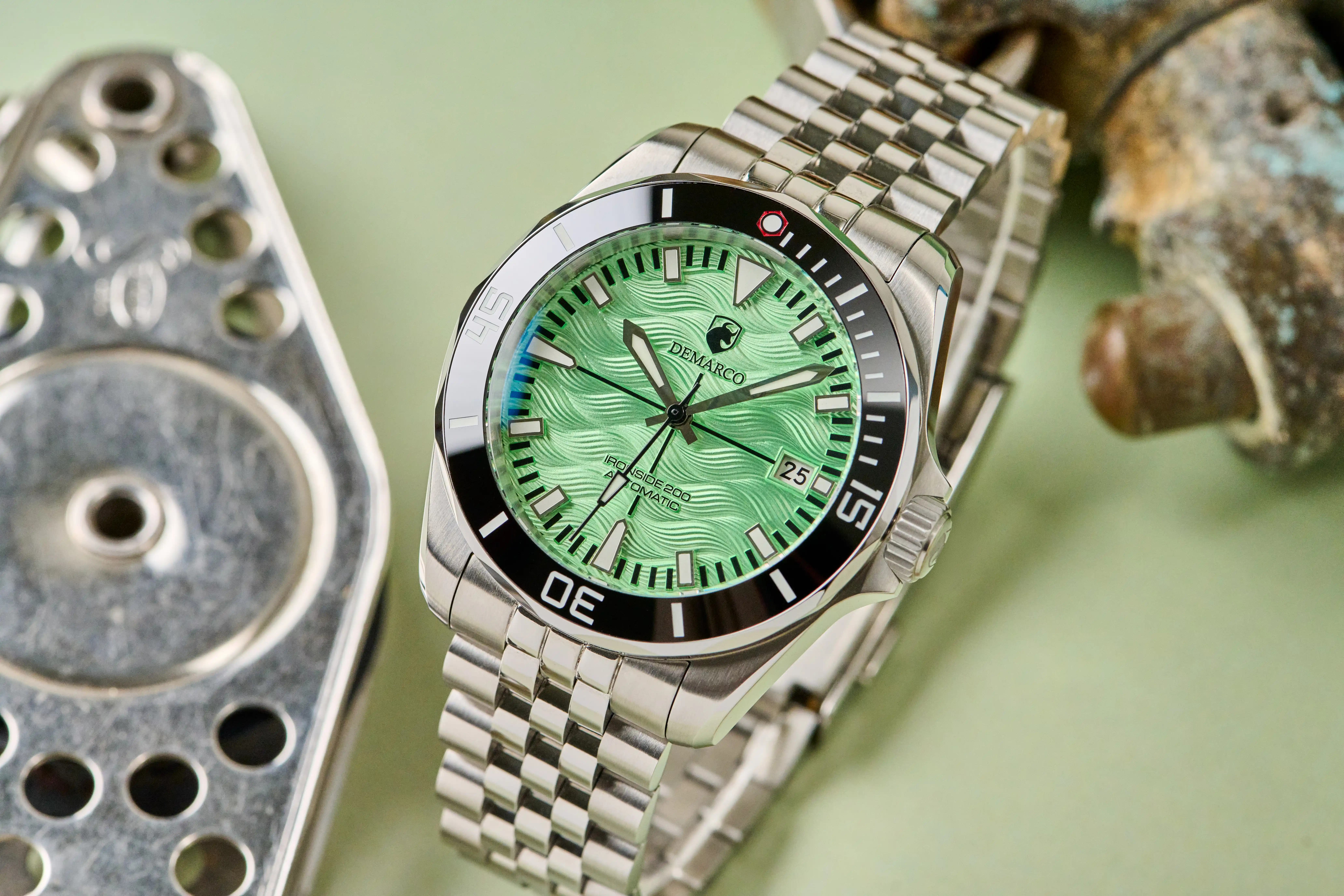



The Miyota 9015: What Is Inside the Ironside 200
The Miyota 9015 powers a large share of the microbrand world. Here is what it does, why so many brands choose it, and what it means for owners.
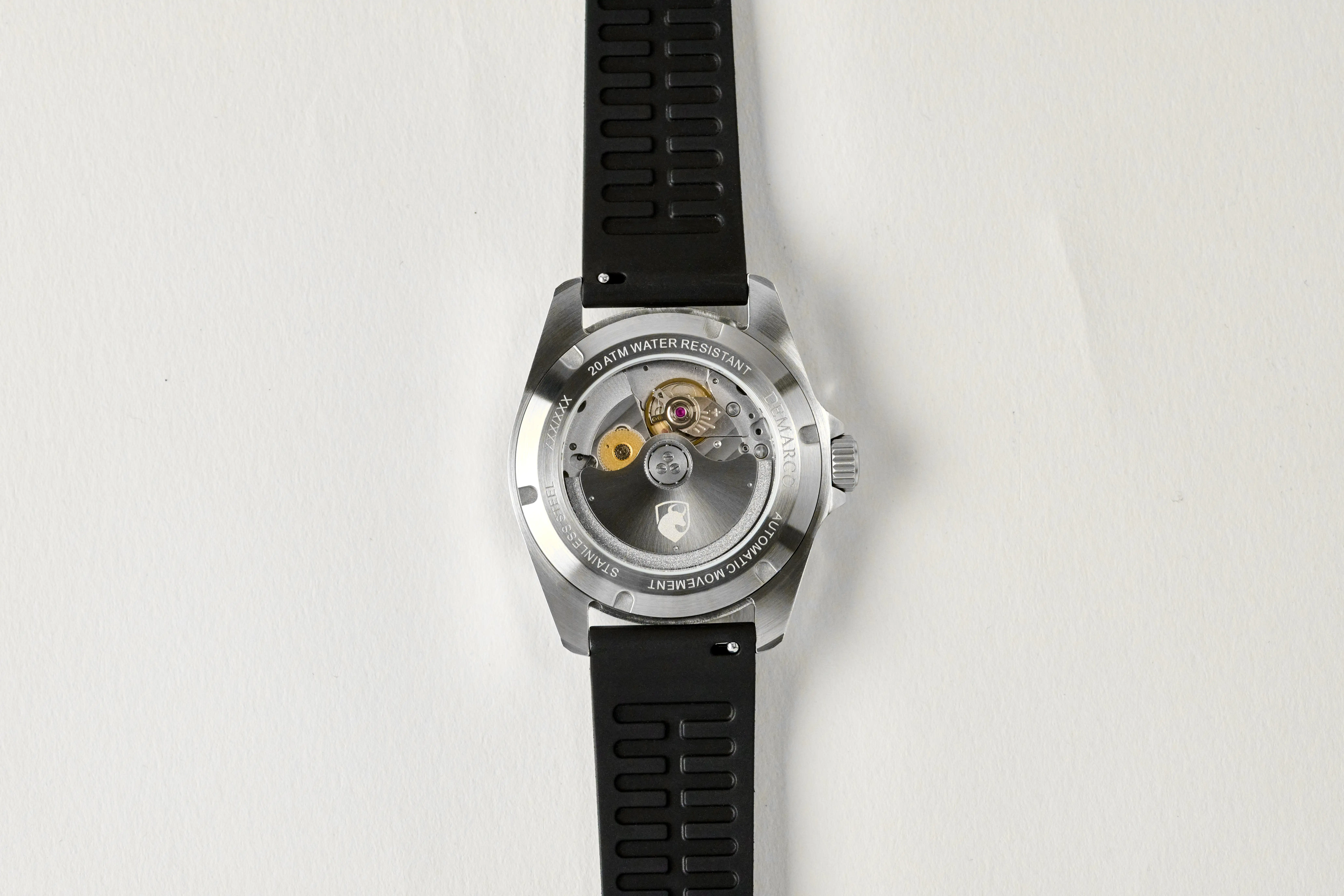
Look inside a large share of the microbrand dive watches made in the last decade and you will find one of a small handful of movements. The Miyota 9015 is one of them. It is not a secret, it is not exotic, and no brand using it pretends otherwise.
That is worth understanding rather than glossing over, because the reasons it is chosen so often are the same reasons it is a good thing to own.
What It Is
The 9015 is an automatic mechanical movement made in Japan by Miyota, the movement arm of the Citizen group, and sold to other manufacturers rather than kept for Citizen's own watches. It arrived in 2009 as the slim, higher beat option in Miyota's range, and it has been in continuous production ever since.
The headline specification is straightforward. It beats at 28,800 vibrations per hour, which is eight ticks a second, so the seconds hand sweeps rather than steps in any way you can pick out by eye. It carries 24 jewels, holds a power reserve of around 42 hours, and is rated to run between roughly minus ten and plus thirty seconds a day.
It also does two things cheaper movements often do not, and both matter day to day. It hacks, meaning the seconds hand stops when you pull the crown out, so you can set the time precisely against another clock rather than approximately. And it hand winds, so you can bring it to life with the crown after it has been sitting in a drawer instead of shaking it awake.
The last number is the one you feel rather than read. The 9015 is 3.9mm thick, which is genuinely slim for an automatic at this level, and that is a large part of why the Ironside 200 finishes at 12.2mm with a 200m case and a box sapphire crystal on top of it.
Why So Many Brands Choose It
The uncharitable answer is cost, and cost is genuinely part of it. But it is not the interesting part.
The 9015 is chosen because it is proven at scale. A movement made in enormous volume over more than fifteen years has had its weaknesses found and engineered out by sheer exposure. There are no surprises left in it. For a small brand producing a few thousand watches, building on something that has already been stress tested by millions of owners is a considerably better decision than gambling on something unproven for the sake of a more impressive line on a spec sheet.
It is also serviceable anywhere. Any competent watchmaker knows this movement, parts are available and inexpensive, and nothing about a repair requires going back to the brand that sold you the watch. That is a genuine ownership advantage and it is rarely mentioned in marketing, because it does not sound exciting. It matters enormously in ten years time.
There is a third reason. Putting a reliable, well understood movement inside frees the budget for the parts you actually touch and see. Sapphire crystal instead of mineral glass. A properly finished case. A ceramic bezel insert with a real action. Lume that works. A bracelet with solid links and a decent clasp. A brand that spends its money on an exotic movement and then economises on the crystal has made a choice that flatters the specification and disappoints the owner.
What the Specification Means in Practice
The 28,800 beat rate is what gives the seconds hand its smoothness. Slower movements tick six times a second and you can see it if you look. Eight beats a second reads as a sweep, and it is the single detail most people notice first when they move from a quartz watch to this one.
The 42 hour power reserve has one practical consequence worth knowing. If you take the watch off on Friday evening and do not wear it over the weekend, it will have stopped by Sunday. That is normal and harmless. Wind it, reset it, carry on. Owners of a single automatic quickly learn this rhythm and it stops being noticeable.
The accuracy tolerance is a published band rather than a promise about your particular watch, and real examples typically settle well inside it. A movement running within ten seconds a day is doing its job.
One honest quirk. The 9015 winds in one direction only, and its rotor is a little more audible than some. If you hold the watch to your ear and turn your wrist you will hear it spin. That is the movement working, not a fault, and every 9015 does it.
Honest Rather Than Exotic
There is a version of this industry that treats a shared movement as something to hide behind vague language about calibres. We would rather say plainly what is in the watch, because a buyer who understands what they are getting is a buyer who is not disappointed later.
The Ironside 200 was built around a movement that will still be repairable long after the brand's marketing has been forgotten, and it wears a custom DeMarco rotor you can see turning through the sapphire display caseback. The money that decision saved went into the parts of the watch you interact with every day. That is the trade, and we think it is the right one.
You can see the full specification and the current dial options on the store page. If you want to know anything the spec sheet does not answer, just ask.

14 DAY RETURNS

FREE GLOBAL SHIPPING
