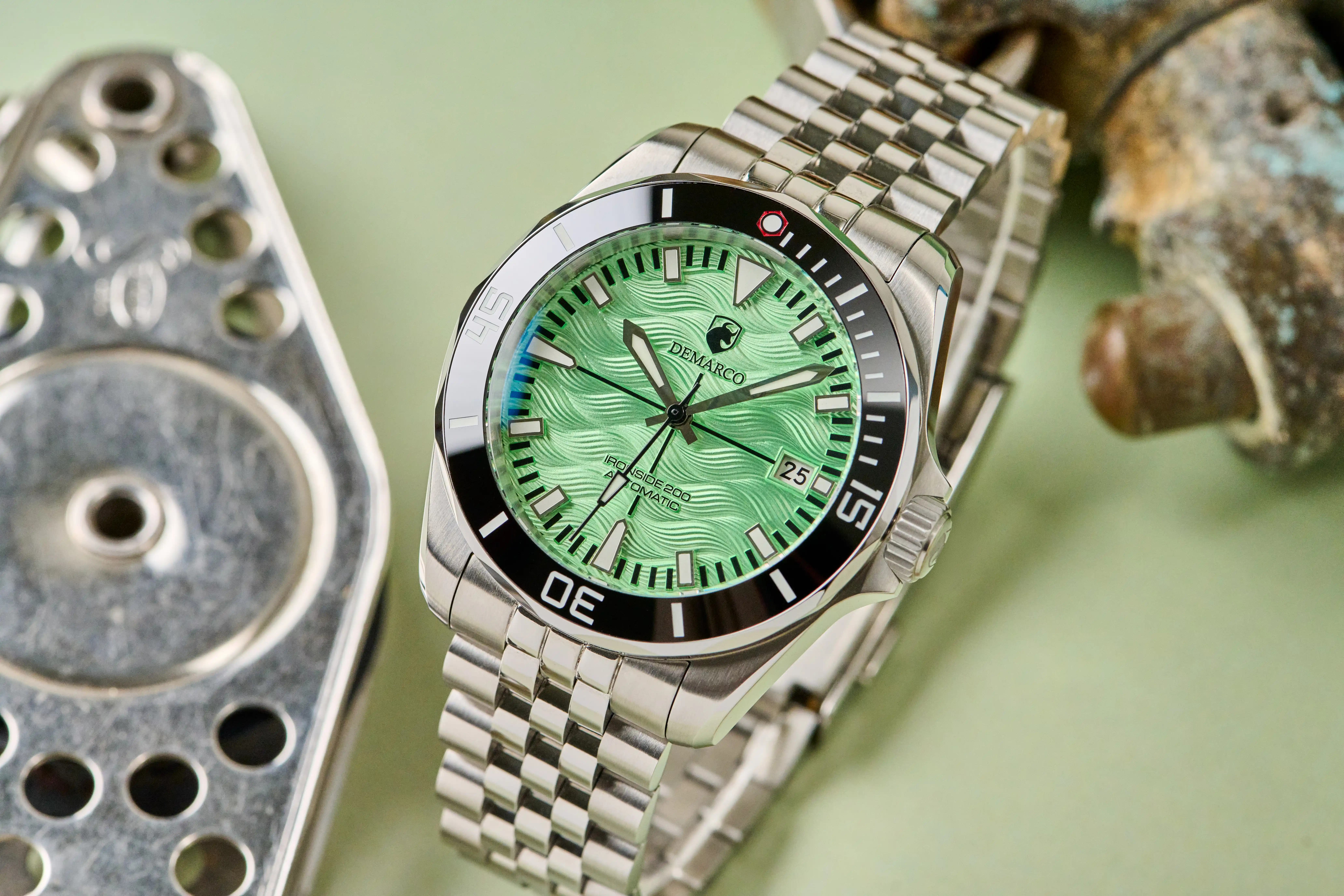



Automatic vs Quartz: Why DeMarco Chose a Mechanical Movement
Quartz watches are cheaper to make and more accurate day to day. Here's why DeMarco built the Ironside 200 around an automatic movement instead.
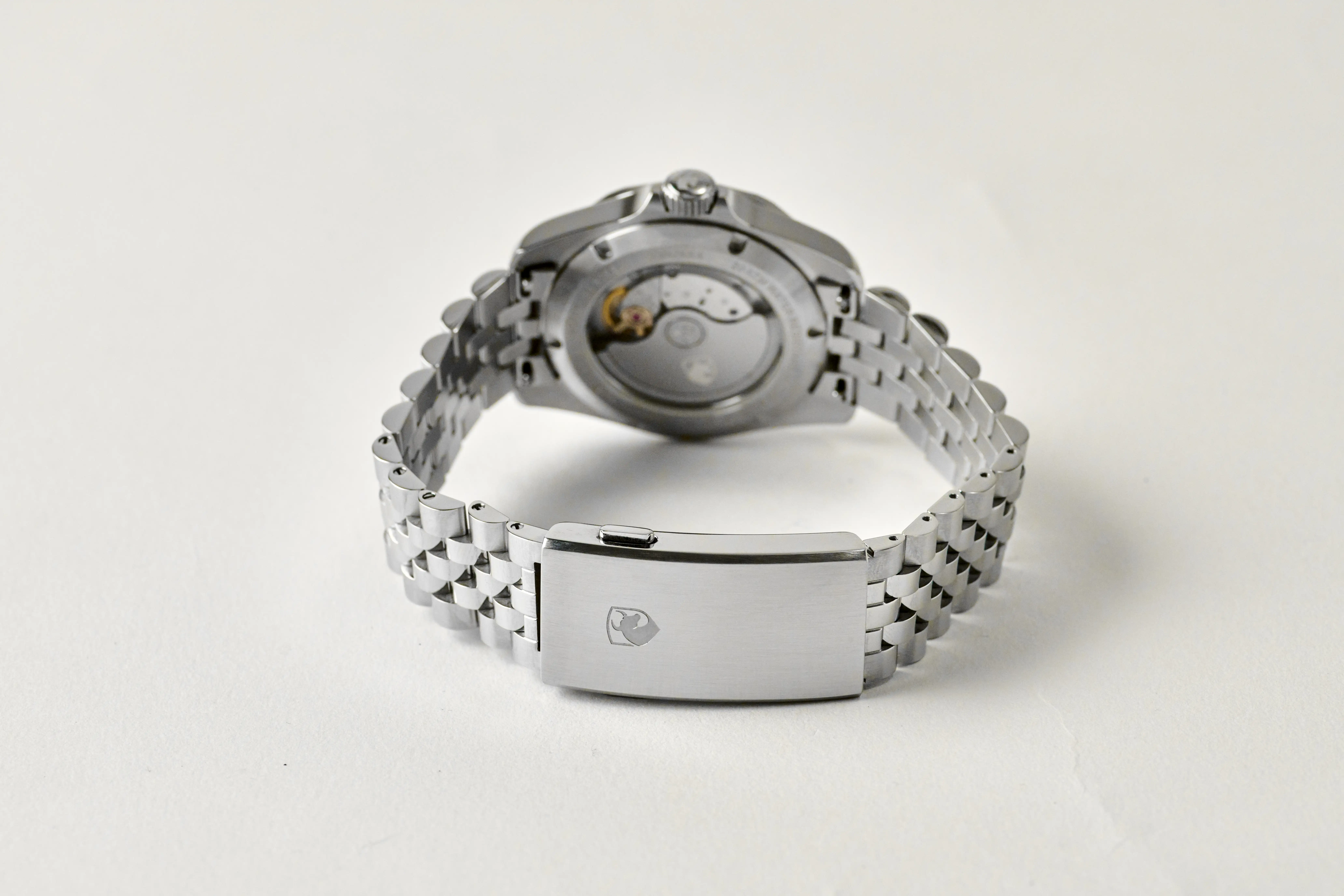
Quartz movements are more accurate, cheaper to produce, and need far less thought from the person wearing them. So why does the Ironside 200 run on a Miyota 9015 automatic instead? The answer comes down to what a watch is actually for.
The Case for Quartz
A quartz movement uses a battery and a vibrating crystal to keep time, typically accurate to within a few seconds a month. It's a genuinely better solution if raw timekeeping accuracy and low cost are the only priorities, which is why most inexpensive watches use one.
What Automatic Gives You Instead
An automatic movement is wound by the motion of your wrist rather than a battery, and it's built from dozens of small mechanical parts working together rather than a chip and a crystal. It will drift a few seconds a day rather than a month, and it needs the occasional wind and eventual service. In exchange, you get a mechanism that's genuinely interesting: visible through a caseback, serviceable indefinitely, and never dependent on a battery running out at the wrong moment.
Why That Fits a Dive Watch
Dive watches have always leaned mechanical, partly out of tradition and partly because a self-winding movement never leaves you checking a battery indicator before a trip. The 9015 is also one of the most widely used and most widely serviced movements in the industry, so keeping the Ironside 200 running long-term isn't a specialist problem.
Not a Downgrade, a Different Trade-off
Choosing automatic over quartz for the Ironside 200 wasn't about avoiding cost. A quartz version would have been cheaper to build. It was about giving the watch the mechanism that fits its category and gives the owner something worth winding, not just wearing.

14 DAY RETURNS

FREE GLOBAL SHIPPING
