


Ceramic vs Aluminum Bezels: Which One Actually Lasts
Ceramic and aluminum dive bezels look almost identical in a product photo and age completely differently. Here is what changes after a year of wear.
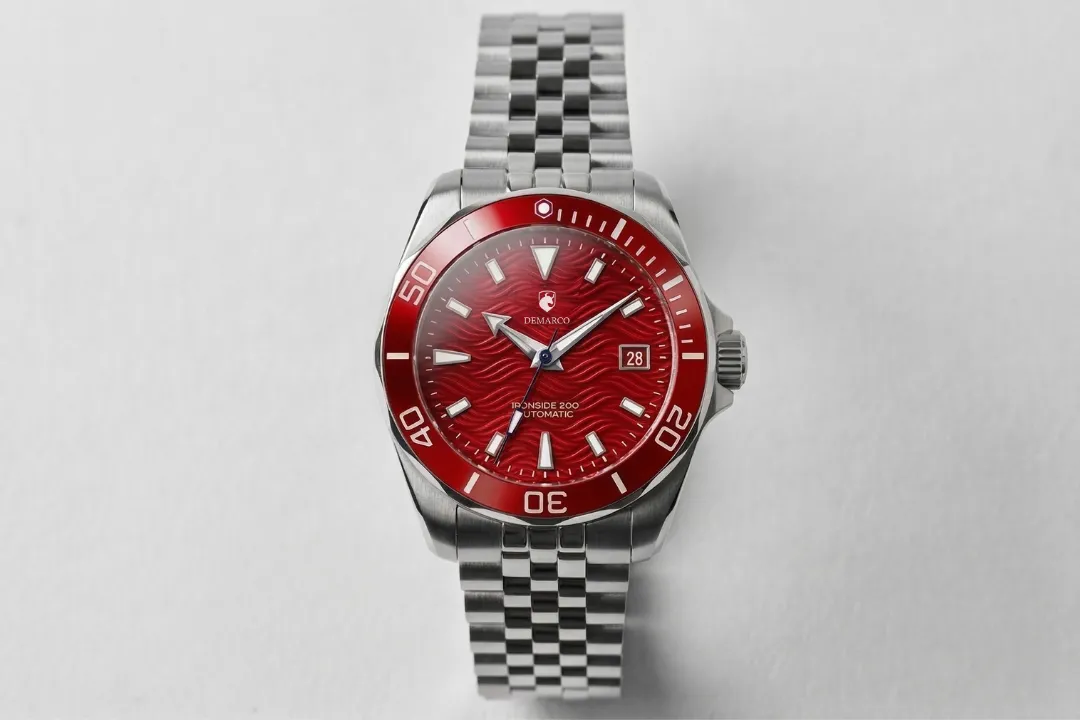
Two dive watches can look identical in a product photo and be nothing alike after a year. A lot of that difference is the bezel insert, and it is one of the few spec-sheet lines where you can genuinely feel where the money went.
What the insert actually is
The bezel insert is the ring carrying the numbers. It is a separate part, fitted into the rotating bezel, and on most watches it is made from one of three things: anodized aluminum, sapphire, or ceramic.
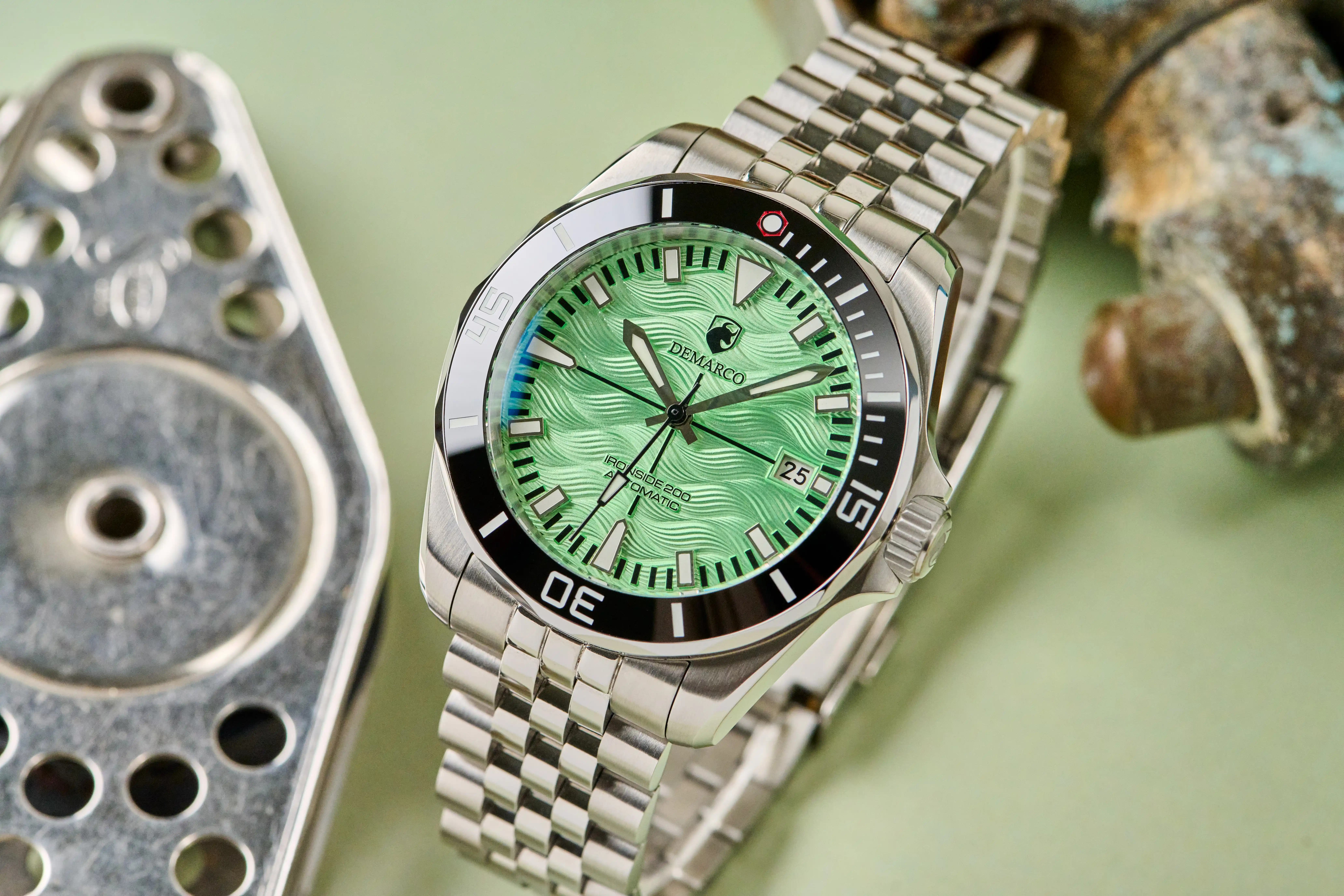
Aluminum was the original. It is light, cheap to produce, easy to color, and it is what the vintage dive watches people romanticize were wearing. Ceramic, properly zirconium dioxide, arrived later and is now standard on serious dive watches. The Ironside 200 uses ceramic.
How aluminum ages
Aluminum is soft. That is the whole story. It picks up scratches from doorframes, desks, car keys and the inside of a bag, and because the color is anodized into a thin surface layer, a deep scratch goes through the color and shows bare metal underneath.
It also fades. Sunlight pulls the pigment out of anodized aluminum, which is why so many genuinely old dive watches have bezels that have gone from black to grey, or from blue to a washed-out slate. Collectors have decided they like this, and there is a real market for a faded bezel. That is a legitimate taste, but be clear about what it is: you are choosing a material that will visibly degrade, and calling the degradation character.
If you want a watch that looks the same in five years as it does today, aluminum is not it.
How ceramic ages
Ceramic barely ages at all, and that is the point of it.
It is dramatically harder than steel. In practice that means the everyday contact that marks up an aluminum bezel simply does not leave a trace on ceramic. Doorframes, keys, a desk edge, the metal buckle of a bag strap, none of it registers. The color is not a surface coating either, it goes through the material, so there is nothing to wear off and nothing to fade in sunlight.
Ceramic also holds a deeper gloss than aluminum can. A ceramic insert catches light more like glass than like metal, which is why a ceramic bezel photographs darker and richer than an aluminum one in the same color.
The honest trade-off
Ceramic is not indestructible, and anyone telling you it is has not dropped one.
Hardness and toughness are different properties. Ceramic resists scratching far better than aluminum, but it is more brittle. A hard, sharp impact against a concrete corner can chip a ceramic insert, and a chip cannot be polished out the way a light scratch in aluminum sometimes can. It is a replacement job.
So the real comparison is not that one is better. It is that aluminum accumulates a hundred small marks and ceramic accumulates none, right up until the day it takes one big hit. In normal wear, over years, ceramic wins comfortably. That is why it is on almost every modern dive watch that takes itself seriously.
Ceramic is also harder and more expensive to manufacture, particularly getting the printed markings crisp and consistent, which is why it tends to appear further up a range.
Does any of this matter if you never dive?
Honestly, more than the diving spec does. Almost nobody buying a 200 meter watch is saturation diving. But everybody puts their watch through doorframes, desk edges and bag buckles, every single day, for years.
Water resistance is a number you will probably never test. Bezel material is a decision you will look at every time you check the time. Of the two lines on the spec sheet, the one that changes how the watch looks in year three is the insert, not the depth rating.
What to look for on any watch
Check whether the markings are printed on top of the insert or filled into it. Filled markings, where the numbers are recessed and packed with lume or paint, survive far longer than anything printed on the surface, regardless of the material underneath.
Look at the bezel edge as well as the face. A lot of damage happens on the outer rim rather than the top, because that is the part that meets the doorframe.
And turn it. Insert material tells you nothing about the click mechanism underneath. A beautiful ceramic bezel on a vague, mushy action is a worse watch than a plain aluminum one that clicks precisely.
The Ironside 200 uses a ceramic insert on a 120-click unidirectional bezel. If you want to know more before you buy, ask us.

14 DAY RETURNS

FREE GLOBAL SHIPPING
