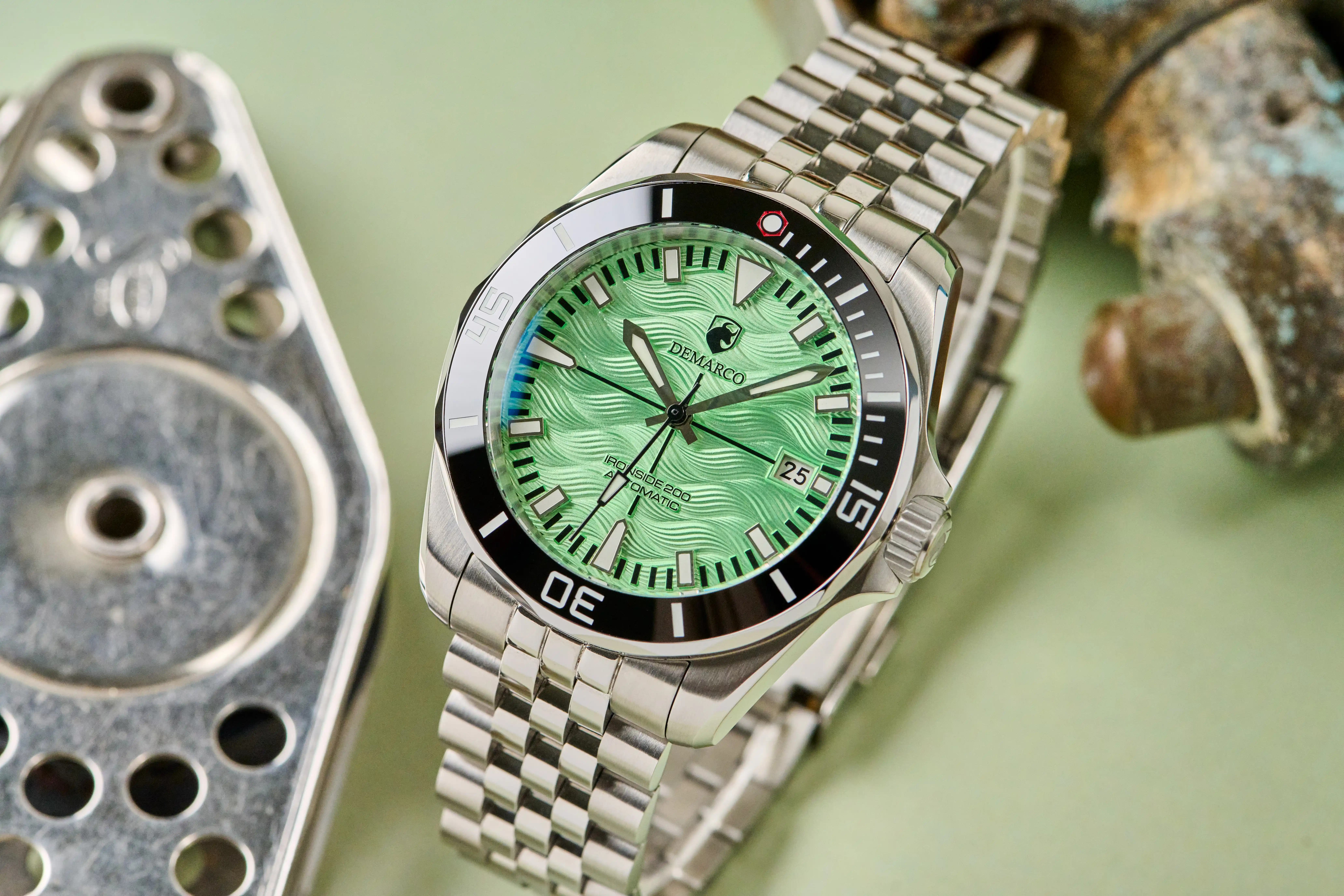



Can You Shower, Swim or Dive With a 200m Watch?
A 200m rating does not mean you can take a watch 200 metres down. Here is what the number actually tests, and what you can genuinely do with it.
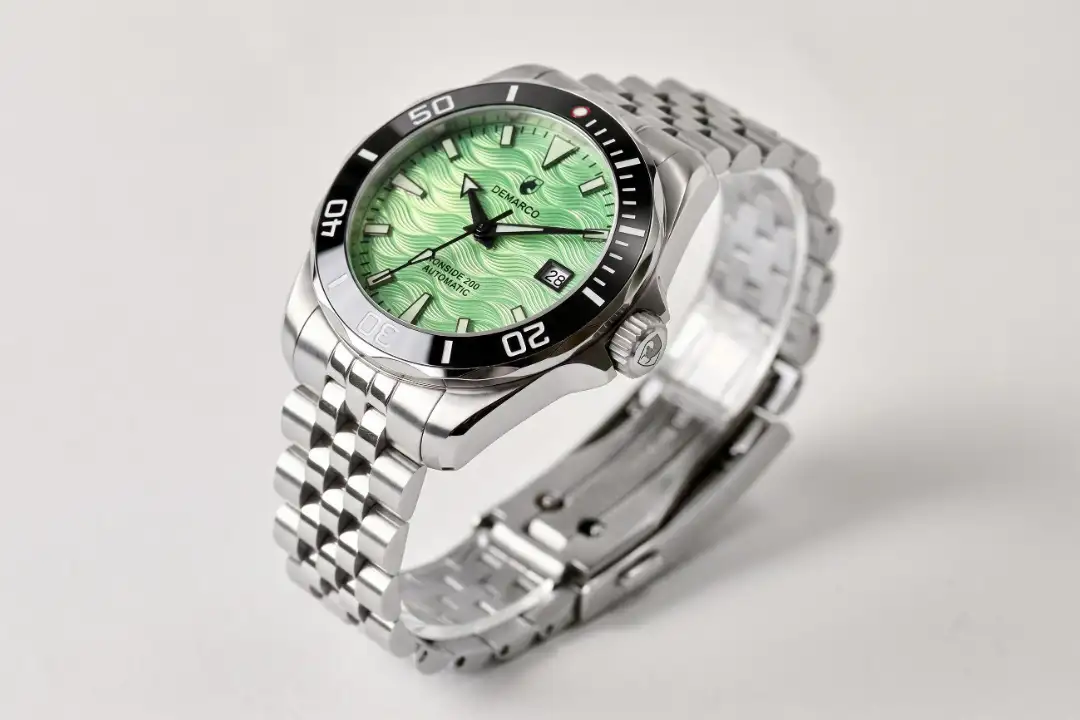
The number on the dial says 200m. The obvious reading is that the watch survives to two hundred metres underwater, so a swimming pool at two metres should be trivially safe.
The obvious reading is wrong, and understanding why is the difference between a watch that lasts a decade and one that fogs up in its first summer.
What the Rating Actually Tests
Water resistance is measured in a laboratory, on a static watch, in still water, at a constant pressure and a stable temperature. The watch is not moving. Nothing is striking it. Nothing is heating or cooling it.
Real water is not like that. Swinging your arm through a stroke briefly generates pressure well above the depth you are actually at. Diving into a pool creates a sharp impact load. Hot water expands metal and rubber at different rates, opening microscopic gaps at the seals.
So the rating is best understood as a measure of how much margin the case has, not as a depth limit you may approach. A 30m watch is splash resistant and nothing more. A 50m watch tolerates being rained on and hands being washed. A 100m watch is genuinely fine for swimming. A 200m watch, like the Ironside 200, has enough margin for swimming, snorkelling and recreational diving with room to spare.
What You Can Genuinely Do With 200m
Wear it in the rain without a thought. Wash your hands, wash the car, get caught in a downpour. Swim in it, in a pool or in the sea. Snorkel in it. Take it recreational diving.
The margin exists precisely so the watch is not living at the edge of its rating during normal use. That is the point of buying a diver rather than a dress watch, and it is why a proper dive watch is such a sensible everyday object even for people who never go near open water.
The Shower Question
This is the one people ask most, and the honest answer is that the watch will almost certainly survive it, but you should not make a habit of it.
Not because of the water. Because of the heat and the soap. Hot water expands the case and the gaskets at different rates, which is exactly the condition under which a seal can momentarily let go. Soap, shampoo and shower gel degrade rubber gaskets over time and leave residue in the crown threads and around the bezel. Neither ruins a watch on the first occasion. Both shorten the life of the seals if you do it daily for years.
A watch is far more likely to fail from a thousand hot showers than from one dive.
The Two Rules That Actually Matter
Check the crown is fully screwed down before it goes anywhere near water. This is the single most common cause of water getting into a dive watch, and it is entirely avoidable. A screw down crown left a quarter turn loose turns a 200m watch into an open case. Make it a habit you do without thinking, the way you check a door is locked.
Never operate the crown while the watch is wet. If you need to adjust the time after swimming, dry it first. Unscrewing the crown with water sitting around it invites that water straight into the movement.
A third, smaller point. Rinse it with fresh water after the sea. Salt is corrosive and it crystallises in the bezel action and the bracelet links. Ten seconds under a tap prevents a lot of grief.
Gaskets Are a Wear Item
The rubber seals doing this work are consumable. They compress, dry out and lose elasticity over years, which is why a fifteen year old watch with its original gaskets is not really a 200m watch any more, regardless of what the dial says.
If you swim in yours regularly, having the seals checked and the resistance pressure tested every couple of years keeps the rating honest. If it lives on your wrist in an office and occasionally gets rained on, that is a much less pressing job. Either way, if a watch has been opened for a battery or a service, the water resistance is only as good as the reassembly, so it is worth having it pressure tested afterwards rather than assumed.
So the short version is this. Two hundred metres does not mean take it to two hundred metres. It means the watch has been built with enough margin that swimming, snorkelling and diving are all comfortably within its capability, and that everyday water is not something you ever need to think about. Screw the crown down, keep it out of hot soapy water, rinse the salt off. Do those three things and the rating will still be true in ten years.
Wondering whether the Ironside 200 suits how you actually live? Have a look at the collection, or ask us. It was built to be worn rather than protected.

14 DAY RETURNS

FREE GLOBAL SHIPPING
