


What Super-LumiNova Actually Does in the Dark
Watch lume is not paint that glows forever. Here is how Super-LumiNova works, why it fades a few hours after dark, and how to charge it properly.
Lume is one of the few things on a watch that people judge entirely on a photograph, usually a long-exposure shot in a dark room that looks nothing like what you will see at two in the morning. It is worth understanding what is actually happening, because it changes what you should expect from it.
It is a battery, not a light
Super-LumiNova is a photoluminescent pigment. It absorbs light, holds that energy briefly, and releases it as a visible glow. It generates nothing on its own. If it has not seen light, it will not glow, and no amount of shaking the watch will change that.
This is the single most useful thing to understand about lume. A watch that looks dim at midnight is usually not a watch with bad lume. It is a watch that spent the evening under a shirt cuff.
Why it is brightest in the first few minutes
The glow does not fade in a straight line. It falls off steeply at first and then settles into a long, low tail.
Take a well-charged watch into a dark room and the first minute is genuinely bright. Ten minutes later it is a fraction of that. An hour later it is a soft green you can find with dark-adapted eyes but would not call bright. That last stage can persist for hours, and it is the stage that actually matters, because it is the one you are in when you wake up and want the time.
Every lume photograph you have ever seen online was taken in the first thirty seconds, on a camera sensor far more sensitive than your eye. That is not dishonest, but it is not what you will see either.
What the color codes mean
Super-LumiNova comes in grades, and the letter codes describe the trade-off between how the lume looks in daylight and how it performs in the dark.
C3 is the classic. It is faintly green in daylight and it is the brightest, longest-lasting of the common grades. If maximum performance is the only thing you care about, C3 wins.
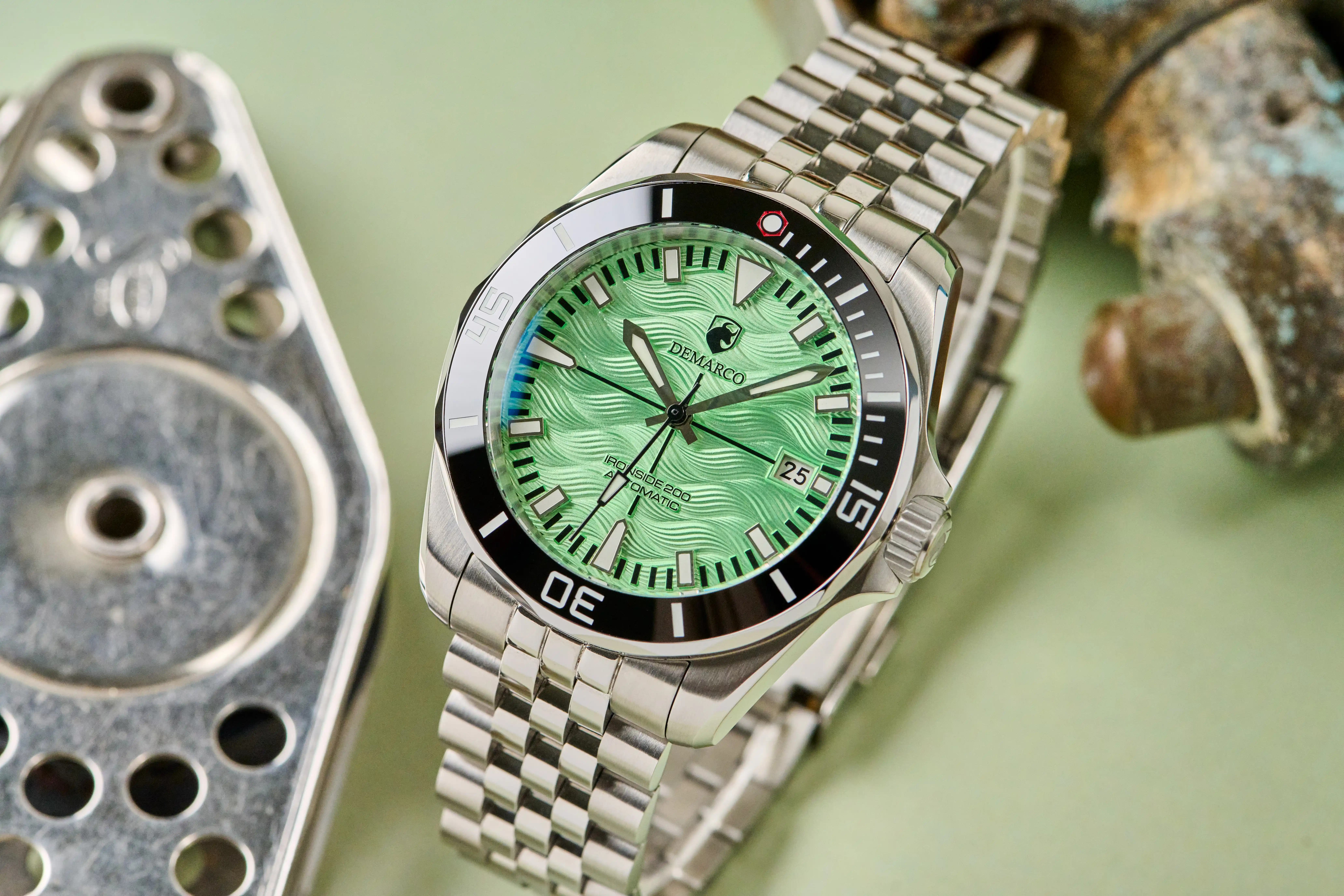
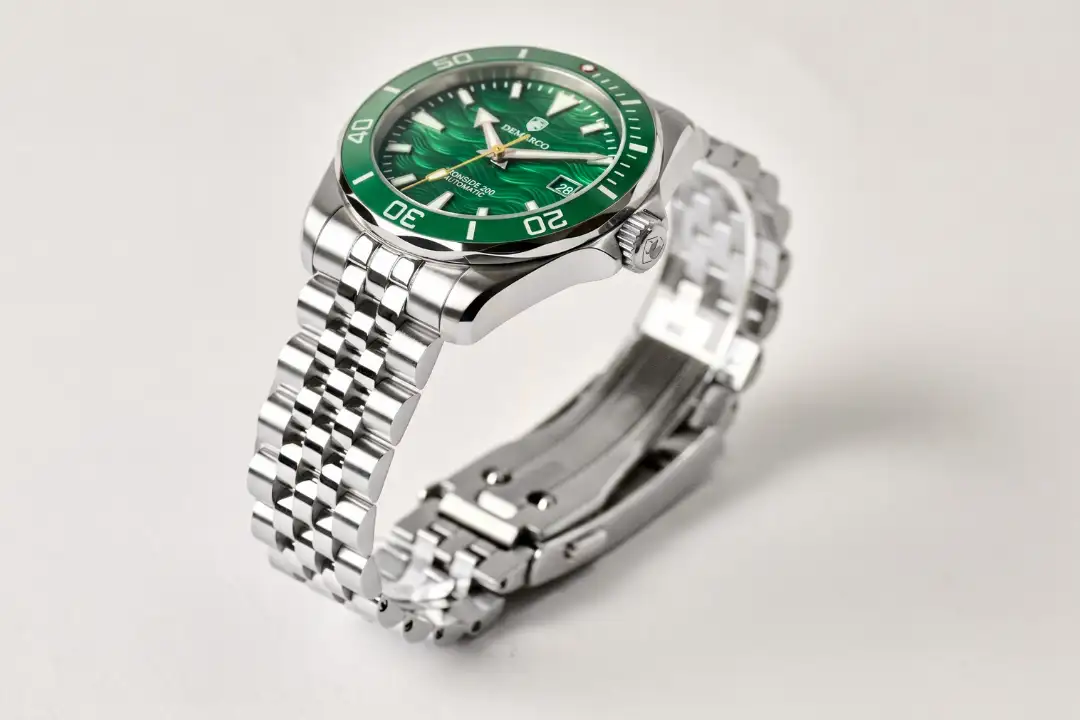
BGW9, which is what the Ironside 200 uses, is near-white in daylight and glows blue. It gives up a little peak brightness against C3 in exchange for looking clean and neutral on the dial in the daytime, which is the state your watch is in for the overwhelming majority of its life. On a sunray dial with a wave pattern, a stark green would fight the finish. White does not.
How to actually charge it
Daylight is far better than indoor light, and it is not close. Ten minutes outdoors on an overcast day will out-perform an evening under a lamp.
If you want a party trick, use a UV torch. Thirty seconds of UV will drive the lume harder than an hour of ordinary room light and produces the eye-watering brightness you see in photographs. It does no damage.
What does not work is a phone screen, or a quick wave under a bulb on the way to bed. There is not enough energy there to matter.
Where the lume is put matters more than how much
Total lume coverage is a poor measure of a useful watch in the dark. What matters is whether you can tell the hands apart, and whether you can find the reference point on the bezel.
The Ironside 200 puts BGW9 on the hands and on the bezel pip. That is the functional minimum done properly: the pip tells you where zero is, and the hands tell you where you are against it. A dial lumed edge to edge looks spectacular in a photo, and it can make the hands harder to read against the glow behind them.
If you are comparing watches in the dark, look for whether the hour and minute hands are distinguishable at a glance, not for how much of the dial is lit.
It does not wear out
Super-LumiNova is not radioactive and it does not decay. Tritium tubes, the other approach, do glow without charging and do get dimmer over roughly a decade because the tritium is decaying. Photoluminescent pigment has no such clock. A watch with Super-LumiNova will charge and glow exactly as well in twenty years as it did on the first day, assuming nothing damages the dial.
You can see how the BGW9 sits against the wave dial on the Ironside 200, or ask us if there is something specific you want to know.

14 DAY RETURNS

FREE GLOBAL SHIPPING
