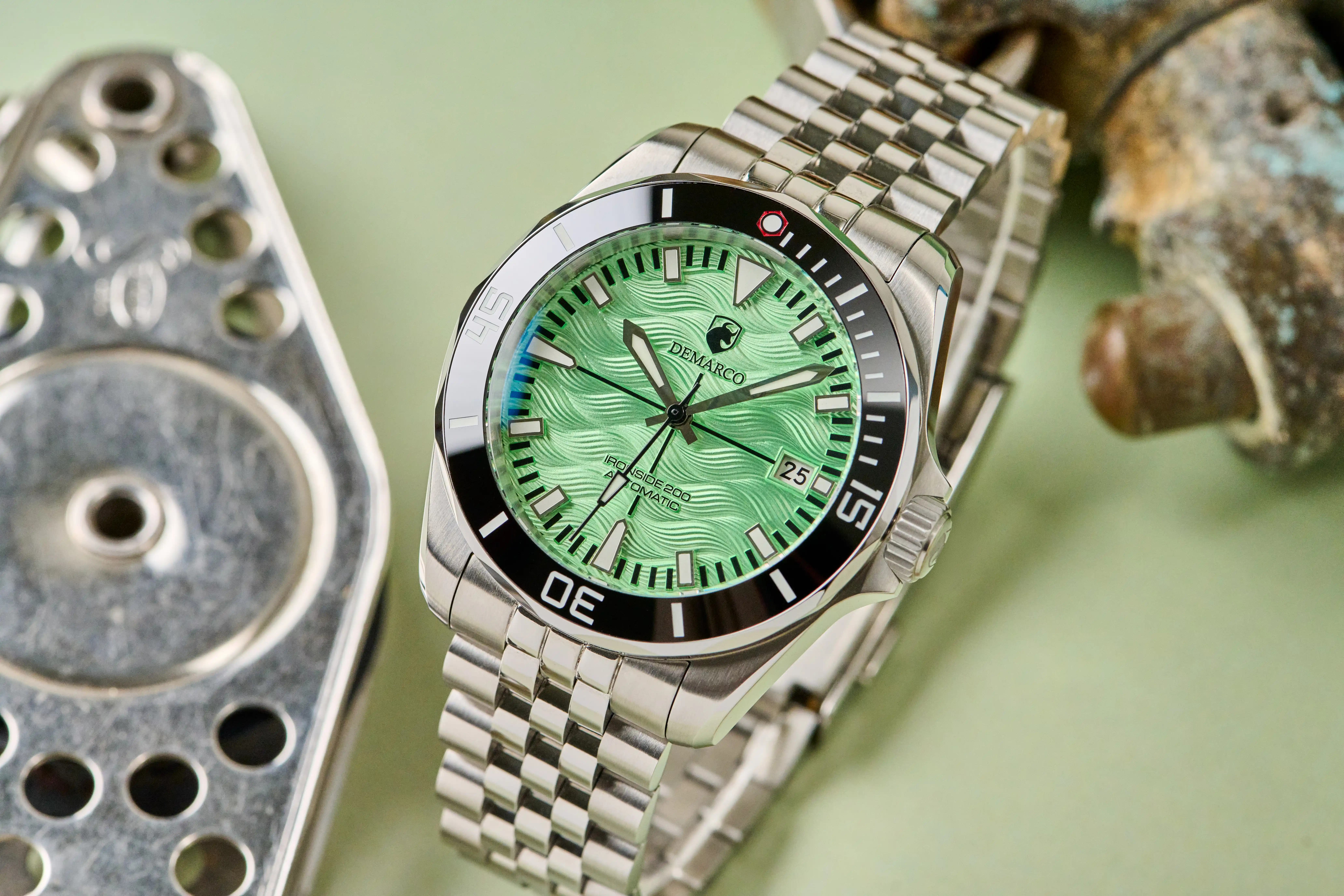



How to Use a Dive Watch Bezel to Time Anything
The rotating bezel on a dive watch is the most useful thing on it. Here is how to use one, why it only turns a single way, and what to time with it.
Most people who buy a dive watch never turn the bezel. It sits there looking purposeful and does nothing for years. That is a shame, because it is the most genuinely useful thing on the watch, and it takes about ten seconds to learn.
What the bezel actually does
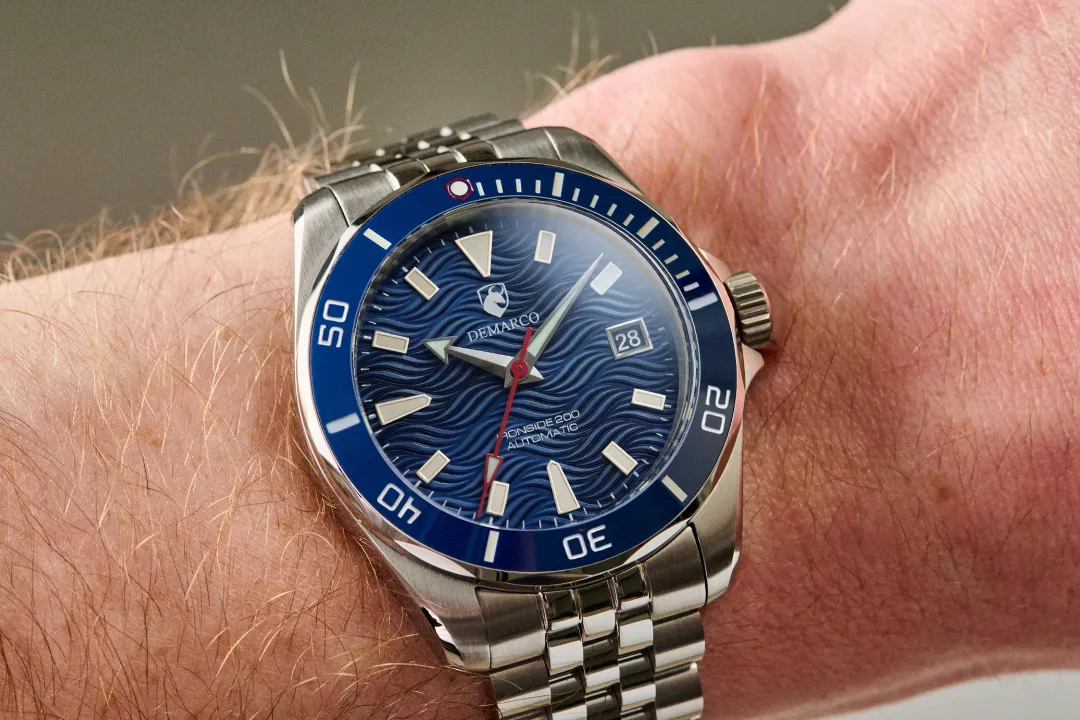
A dive bezel is a countdown timer that needs no battery, no button and no attention. The numbers around the outside are minutes. You line up the marker at zero with your minute hand, and from that moment the minute hand points at how long has passed.
That is the whole mechanism. There is no start button because starting it is the act of turning it. There is no stop button because you just read it and stop caring. On the Ironside 200 the bezel has 120 clicks, which means every click is thirty seconds, so you can set it precisely against the half minute rather than guessing.
Why it only turns one way
Try turning your bezel clockwise and it will not go. That is deliberate, and it is a safety feature that predates every one of us.
A diver sets the bezel at the start of a dive to track air supply. If the bezel could rotate in both directions, a knock against a tank or a rock could move it either way. Moved one way, it tells you less time has passed than really has. That is the direction that kills people. So dive bezels are unidirectional: they can only rotate counter-clockwise, which can only ever make the elapsed time read longer than it is. If it gets knocked, the watch errs toward getting you out of the water early.
You are probably not decompressing off a wreck. It is still a good design, and it is the reason the bezel feels the way it does.
Five things to actually use it for
Parking. Set the bezel when you leave the car and you know exactly how long you have been over the two hours.
Cooking. Pasta, coffee, anything with a window rather than an exact second. Quieter than a phone timer and you do not have to unlock anything.
Workouts. Rest intervals between sets, without staring at a screen and losing five minutes to a notification.
Meetings and calls. Set it when you sit down. You will be surprised how often a thirty minute call is at forty.
Travel. Set it when the boarding gate opens, or when you hand a bag over, and you have a running record of how long something has actually taken.
Reading it without doing arithmetic
The trick people miss is that you never calculate anything. You are not adding minutes to a start time. The minute hand is already pointing at the answer on the bezel. If it sits on 20, twenty minutes have gone. If it has passed the 60 marker and come round again, an hour has gone and you should have been paying attention.
For anything longer than an hour a bezel is the wrong tool. Under an hour it beats a phone every time, because it needs no unlock, no app and no decision about which timer to open.
Why the first fifteen minutes look different
Look closely at almost any dive bezel and the first stretch is marked more finely than the rest. Where the back three quarters of the bezel give you a marker every five minutes, the opening section is often broken down minute by minute.
That is not decoration. Safety stops, the pauses a diver makes on the way up to let nitrogen off-gas, happen in the first few minutes and need to be accurate to the minute rather than the nearest five. So the part of the scale that gets used under pressure is the part that gets the detail.
Above water it is still the part you use most. Almost everything you will time with a bezel, an espresso, a set of intervals, how long the kettle has been on, lands inside that first quarter of the dial, which is exactly where the markings are most precise.
Looking after it
A ceramic bezel insert like the one on the Ironside 200 will not fade or scratch the way an aluminum one does, but the mechanism underneath is still mechanical. Rinse the watch in fresh water after swimming or the sea, and turn the bezel while you do it. Salt and grit collect in the click ring, and that is what makes a bezel go gritty over years rather than the insert itself wearing.
If it ever feels stiff, that is almost always debris rather than damage, and it usually comes back with a rinse and a few full rotations.
Every Ironside 200 ships with a 120-click unidirectional ceramic bezel. If you have a question about yours, send us a message and we will answer it.

14 DAY RETURNS

FREE GLOBAL SHIPPING
